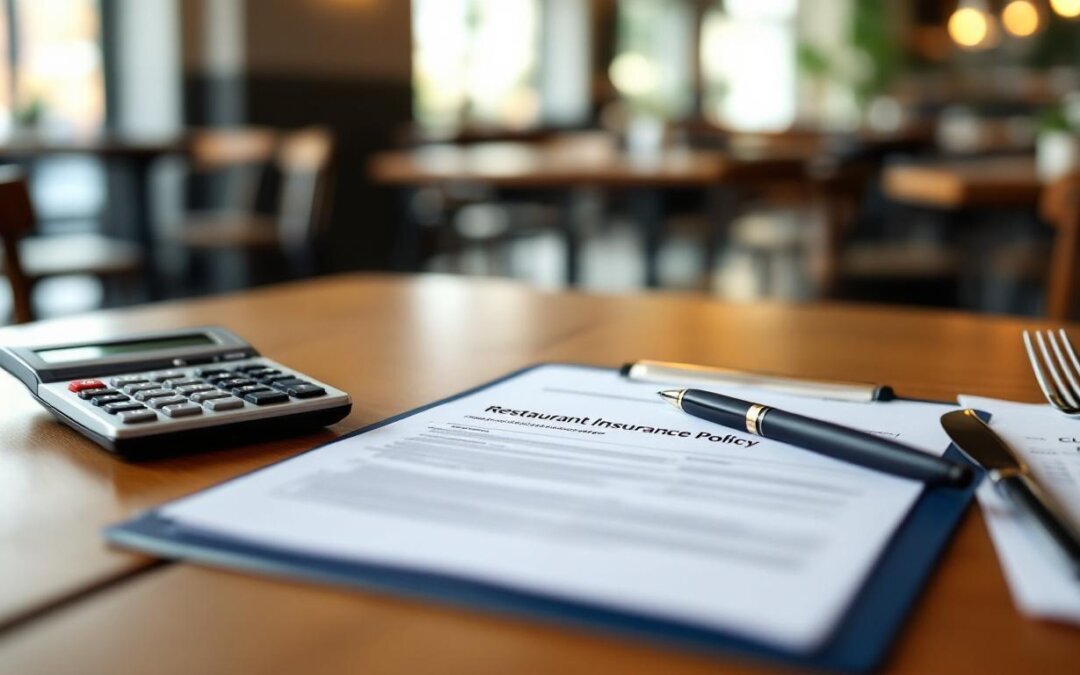
Running a restaurant means juggling countless responsibilities, and protecting your business from financial disaster should be at the top of your list. Restaurant insurance isn’t optional-it’s the safety net that keeps you operating when accidents happen.
At Shurr Insurance, we’ve seen firsthand how the right coverage makes the difference between a minor setback and a business-ending crisis. This guide walks you through what you actually need to know.
What Restaurant Insurance Actually Covers
General Liability Protection
General liability insurance protects your restaurant when a customer gets injured on your premises or claims property damage caused by your business. This coverage pays for medical expenses, legal fees, and settlements, with most restaurants carrying limits between $500,000 and $1,000,000 per occurrence. According to data from active customers, general liability for restaurants averages around $73 per month, though costs range from $53 to $332 monthly depending on your location and risk profile. Many policies come with a $0 deductible for general liability, which means you don’t pay out of pocket before coverage kicks in. Beyond bodily injury claims, general liability also covers copyright infringement and costs related to foodborne illnesses, making it essential protection against the everyday hazards of running a food business.
Property Protection for Your Physical Assets
Property insurance covers your kitchen equipment, furniture, inventory, and the physical space itself from fire, theft, and vandalism. Commercial property for restaurants averages about $106 per month, with typical monthly costs ranging from $33 to $107 depending on your property value and location. A $1,000 deductible is standard, meaning you’ll pay that amount out of pocket before insurance covers the rest. If you lease your space, the building owner’s property insurance covers the structure itself, but you remain responsible for insuring everything inside-your equipment, inventory, and any improvements you’ve made. This distinction matters because replacing a commercial kitchen after a fire can cost tens of thousands of dollars, and you need coverage that reflects your actual equipment value, not what a landlord’s policy covers.
Workers Compensation and Liability Protection
Workers’ compensation insurance is legally required in most states once you hire your first employee, and it covers medical expenses and lost wages when staff members get injured on the job. The median cost runs around $139 per month for restaurants, calculated at approximately $2.25 per $100 of payroll. This coverage protects both your employees and your business-without it, injured workers can sue you directly for damages. Employer’s liability insurance, sometimes included with workers’ comp and sometimes sold separately depending on your state, shields your business if an employee sues for a workplace injury. Restaurants face high injury rates from burns, cuts, and slip-and-fall accidents in fast-paced kitchen environments, so this protection isn’t just recommended-it’s the difference between staying operational and facing devastating legal costs.
Beyond the Basics
Most restaurant owners start with these three core coverages, but your specific operation may require additional protection. Liquor liability insurance protects you if alcohol-related incidents occur on your premises, while business interruption insurance compensates you for lost income during forced closures from fires or equipment failures. Food contamination insurance covers spoiled or contaminated food after power outages or refrigeration failures. The right combination of coverages depends on what you actually serve, where you operate, and how many employees you have-factors that vary dramatically from one restaurant to another.
Finding the Right Coverage for Your Restaurant
Assessing your specific risks comes first. Consider your restaurant’s size, the services you offer (dine-in, delivery, catering), your assets, and your location’s exposure to natural disasters or high crime. An independent insurance agent can help you identify gaps in coverage and recommend limits that match your actual exposure, not just industry averages.
Common Risks Restaurant Owners Face
Foodborne Illness and Health Code Violations
Foodborne illness outbreaks destroy restaurants faster than most owners realize. The CDC estimates that foodborne illnesses sicken 48 million Americans annually, and a single outbreak forces your restaurant to close for weeks while health departments investigate. When contamination occurs, you face medical bills for affected customers, legal fees, lost revenue during closure, and permanent damage to your reputation. Health code violations compound the problem-inspectors look for temperature control failures, cross-contamination, pest infestations, and improper food storage. One violation might seem minor, but repeated failures lead to fines up to $1,000 per violation in many states, license suspension, or permanent closure.
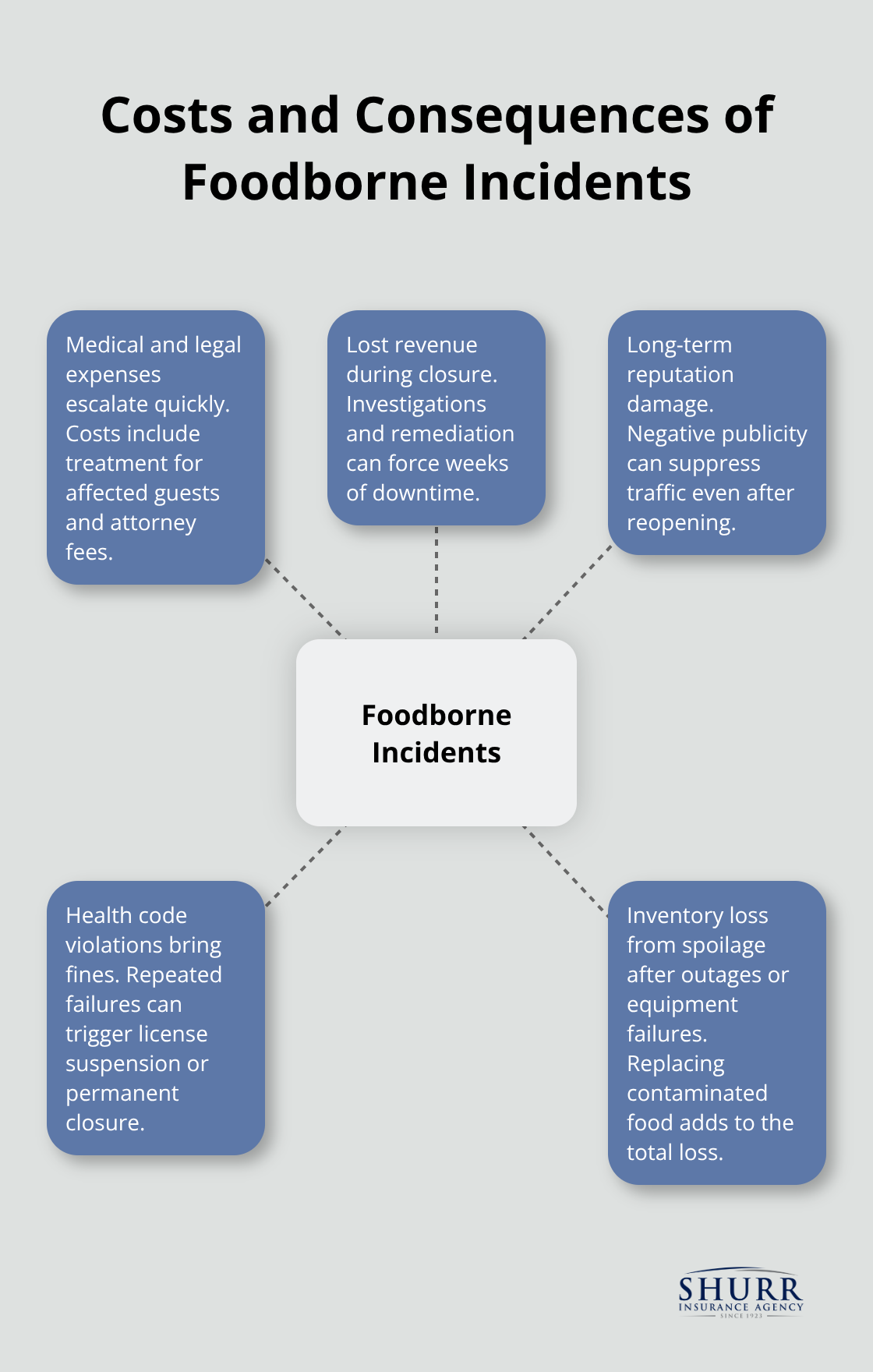
General liability insurance covers some foodborne illness costs, but food contamination insurance specifically reimburses spoiled inventory after equipment failures like refrigerator breakdowns or power outages, which cost restaurants an average of $1,800 per incident.
Your best defense combines insurance with strict protocols. Maintain equipment logs, train staff on food safety monthly, and conduct regular temperature checks throughout service. These practices protect both your customers and your bottom line.
Fire and Water Damage
Fire and water damage represent your largest property loss exposure, particularly in kitchens where grease fires ignite without warning and sprinkler systems activate unexpectedly. The National Fire Protection Association reports that restaurants experience structure fires at twice the rate of other commercial buildings, with cooking equipment the leading cause. A single fire destroys $50,000 to $100,000 in equipment and inventory within minutes, forcing months of closure while you rebuild. Water damage from burst pipes, roof leaks, or flooding during storms causes equal devastation but often goes uninsured when property limits fall short of actual equipment value.
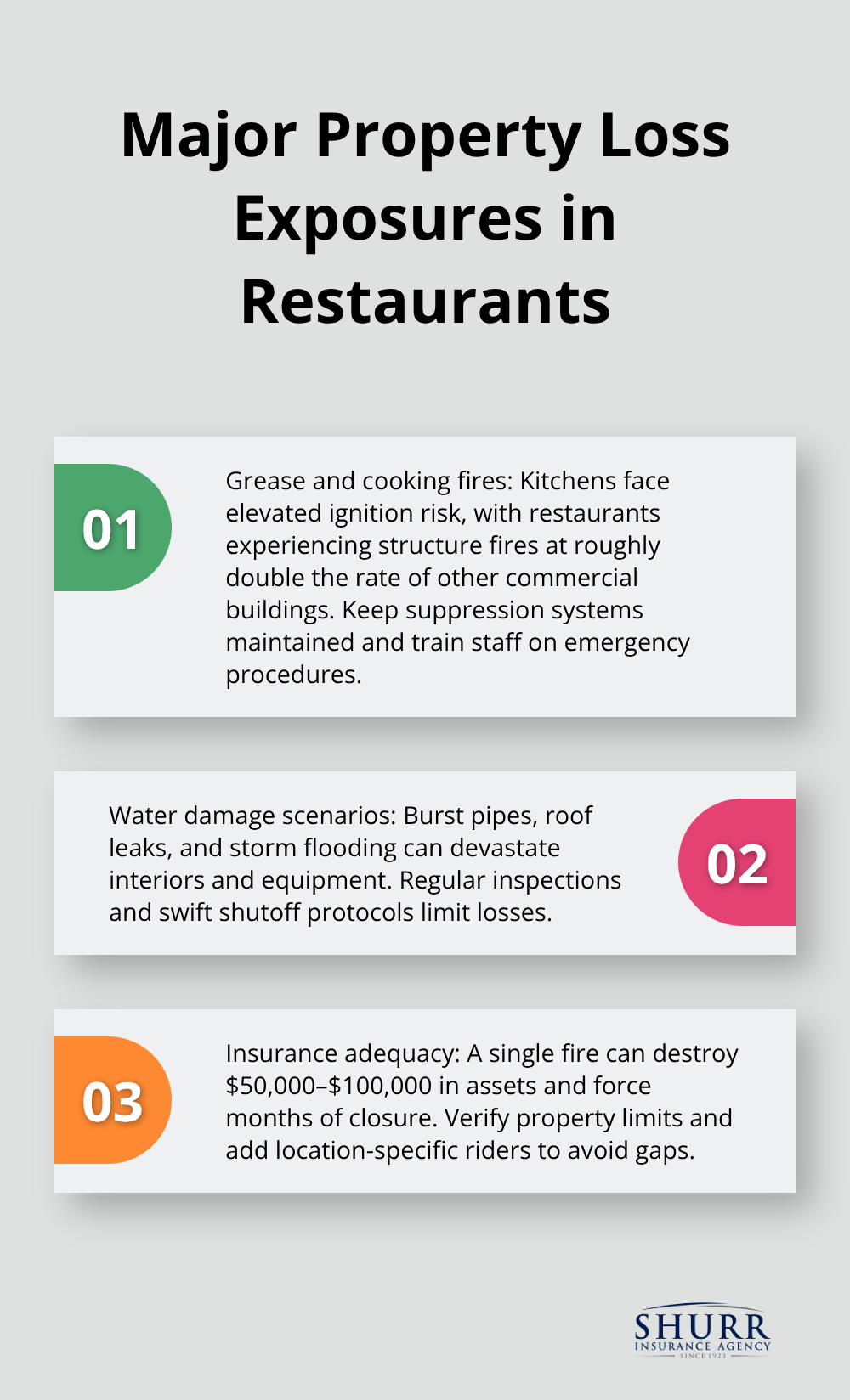
Commercial property insurance with adequate limits protects against these scenarios, though you must verify coverage for perils specific to your location. Earthquake riders in California, flood insurance in flood zones, and wind coverage in hurricane regions cost extra but prevent catastrophic gaps. Your location determines which riders matter most-a restaurant in a flood zone needs different protection than one in a dry climate.
Slip and Fall Accidents
Slip and fall accidents happen constantly in restaurants: wet floors near bathrooms and kitchen exits create liability exposure, and a single serious injury claim exceeds $500,000 in medical costs and settlements. Wet floors pose the greatest risk because they develop suddenly during service when staff focus on customers rather than maintenance. General liability insurance covers these claims, but prevention through proper maintenance and staff accountability reduces both accidents and insurance premiums over time.
Train staff to clean spills immediately, post wet floor signs, and maintain non-slip mats in high-traffic areas. Document all accidents in writing, including witness statements and photos. These steps create a safety culture that protects your employees and your business. Understanding these risks helps you identify which insurance coverages matter most for your specific operation, which brings us to selecting the right policy for your restaurant’s unique needs.
How to Select the Right Restaurant Insurance Coverage
Choosing restaurant insurance requires moving beyond industry averages and understanding what actually happens in your operation. Start by documenting your specific exposure: measure your dining and kitchen square footage, calculate projected annual sales, note how many employees you’ll hire, and identify whether you serve alcohol or operate delivery services. This information directly determines your premium and coverage needs. A 2,000-square-foot casual diner faces different risks than a 5,000-square-foot fine dining restaurant with full catering operations. When you approach quotes, insurers ask these exact details because vague answers lead to either inadequate coverage or overpaying for protection you don’t need. Gather lease terms if you rent your space, because landlords often require proof of specific coverage amounts before they’ll sign off on your tenancy. Many restaurants discover mid-year that their lease mandates $1 million in general liability when they only purchased $500,000, forcing emergency policy increases and additional costs.
Build Your Foundation with Core Coverage
Most restaurants start with three foundational policies: general liability ($500,000 to $1,000,000 per occurrence), commercial property matching your equipment value, and workers’ compensation covering your payroll. This combination costs between $300 and $500 monthly for a typical small restaurant. Once these are in place, evaluate whether your specific operations require additional protection. A restaurant serving alcohol absolutely needs liquor liability insurance because alcohol-related incidents create severe legal exposure. A restaurant offering delivery needs commercial auto insurance for $1,200 to $2,500 yearly. A restaurant in a flood zone needs flood insurance riders because standard property policies exclude flood damage entirely. The mistake most owners make is either bundling everything into one policy they don’t fully need or purchasing bare-minimum coverage and discovering gaps when claims arise. Compare bundled packages carefully against purchasing individual policies separately, because bundling doesn’t automatically save money if coverage limits differ between options.
Partner with an Independent Agent for Local Expertise
Independent insurance agents outperform online quote tools for restaurant coverage because they access multiple carriers, understand local risk factors, and customize policies to your actual exposure. An agent in Northwest Indiana knows which restaurants face flood risk from Lake Michigan proximity, which neighborhoods experience higher theft, and how seasonal tourism affects coverage needs. They identify gaps that online platforms miss-a restaurant owner might not realize they need hired and non-owned auto insurance if staff occasionally use personal vehicles for deliveries, or that their property limits should account for upcoming kitchen equipment upgrades. Independent agents build relationships that adapt as your business grows. They negotiate with carriers on your behalf, coordinate claims when accidents happen, and adjust coverage annually rather than letting policies stagnate.
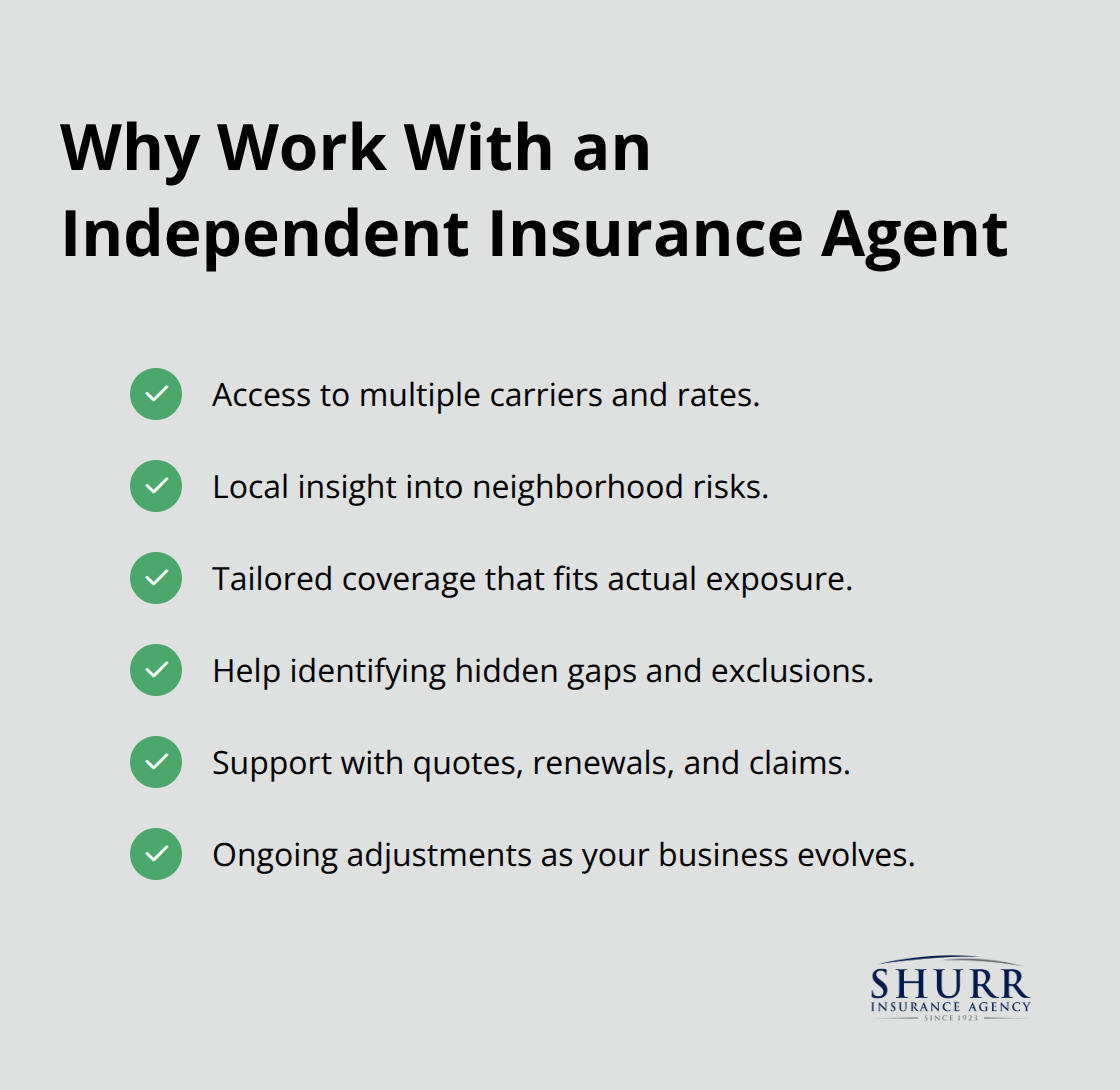
An agent also explains policy exclusions in plain language, so you understand what happens after a fire, what foodborne illness claims actually cover, and why certain perils require riders. This clarity prevents the shock of discovering coverage gaps after a loss occurs.
Final Thoughts
Restaurant insurance protects your business from the financial devastation that follows accidents, property damage, and liability claims. The three core coverages-general liability, commercial property, and workers’ compensation-form the foundation of adequate protection, but your specific operation determines whether you need additional layers like liquor liability, business interruption, or food contamination coverage. Skipping coverage or purchasing limits that fall short of your actual exposure creates dangerous gaps that emerge exactly when you need protection most.
The cost of restaurant insurance varies dramatically based on your location, property value, number of employees, and services offered, but inadequate coverage always costs more than comprehensive protection. A $500,000 general liability limit might seem sufficient until a serious injury claim exceeds that amount and you’re personally liable for the difference. Property limits that don’t account for your actual equipment value leave you replacing a commercial kitchen out of pocket.
Getting insured starts with honest assessment of your operation-document your square footage, projected sales, employee count, and specific services you offer. Connect with Shurr Insurance, a fourth-generation family-owned independent agency serving Northwest Indiana since 1923, and their agents will customize policies to your actual exposure rather than pushing generic packages. Contact them today to discuss your restaurant’s specific insurance needs and protect your business.