Food truck businesses face unique risks that standard business insurance doesn’t cover. From vehicle accidents to customer injuries, the mobile nature of your operation creates specific liability exposures.
We at Shurr Insurance understand these challenges. Food truck insurance protects your investment, equipment, and livelihood against the unexpected incidents that can shut down your business overnight.
What Coverage Does Your Food Truck Actually Need?
General Liability Protection Against Customer Claims
General liability insurance serves as your primary defense against customer injury lawsuits. Food truck operators pay an average of $42 monthly for this coverage, which provides $1 million in protection per occurrence. This policy covers slip and fall accidents, food poisoning claims, and property damage incidents that happen during service.
Food trucks face higher exposure than traditional restaurants because customers often eat while they stand or walk, which increases accident risks. The coverage protects you beyond your truck location and includes incidents at festivals, markets, and private events where you operate.
Commercial Auto Insurance for Mobile Operations
Commercial auto insurance costs food truck owners approximately $272-$954 monthly, a significant increase over personal vehicle coverage due to the combined risks of driving and operating cooking equipment. This policy protects against collision damage, theft, and liability claims from vehicle accidents.
The coverage amount depends on your truck’s value and equipment worth. States require minimum liability coverage that ranges from $300,000 for trucks under 10,001 pounds to $750,000 for heavier vehicles (with some states like California and New York requiring even higher amounts).
Workers Compensation and Equipment Protection
Workers compensation insurance adds another $78 monthly to your costs but becomes mandatory in most states when you hire employees. This coverage protects your staff from job-related injuries and illnesses that occur during food preparation or service.
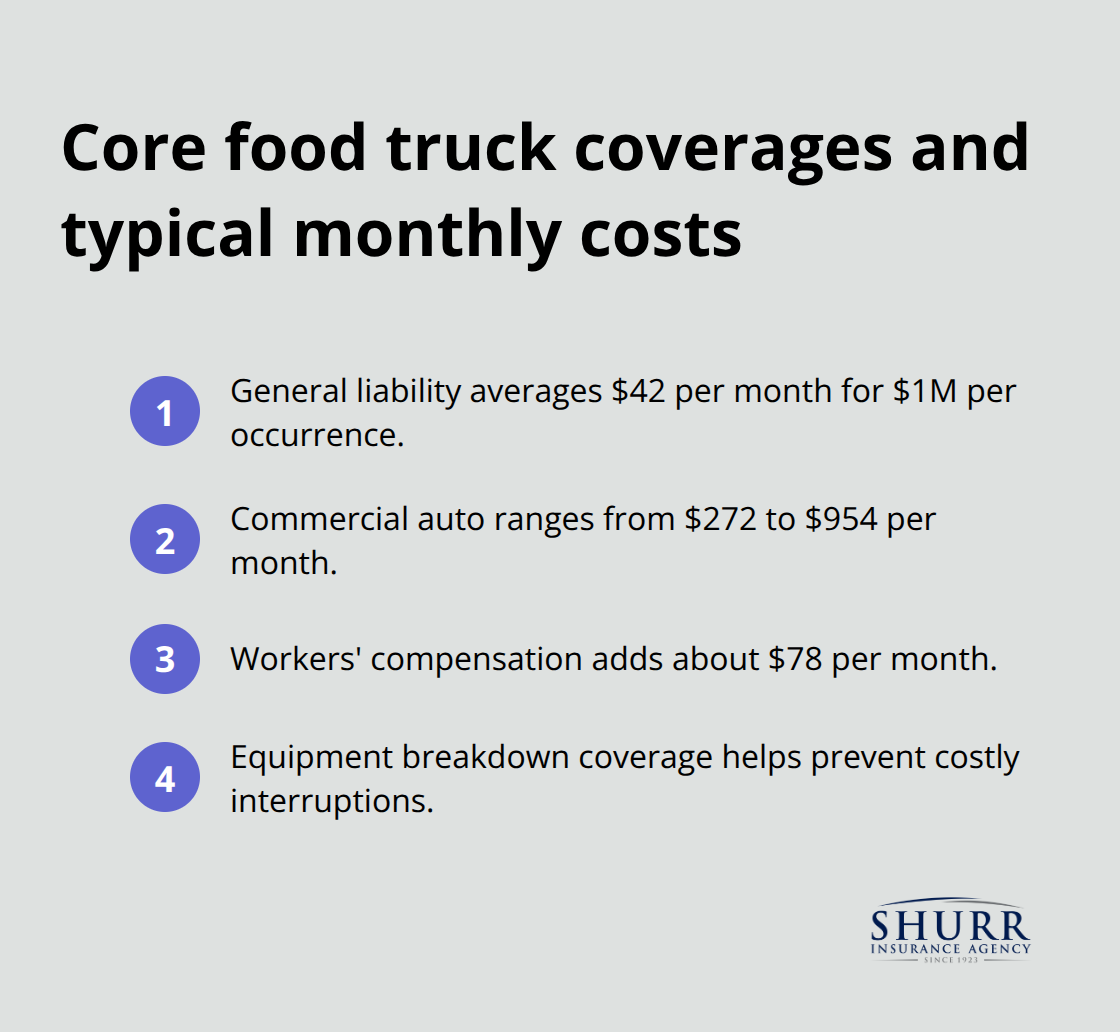
Equipment breakdown coverage protects against mechanical failures that could shut down operations entirely. High-value kitchen equipment drives up premium costs substantially, but this protection prevents total business interruption when your fryer or refrigeration system fails unexpectedly.
Understanding these coverage requirements helps you prepare for the various factors that influence your insurance costs, from your location to the specific risks associated with your menu items.
What Drives Your Food Truck Insurance Costs Higher
Geographic Location Creates Premium Differences
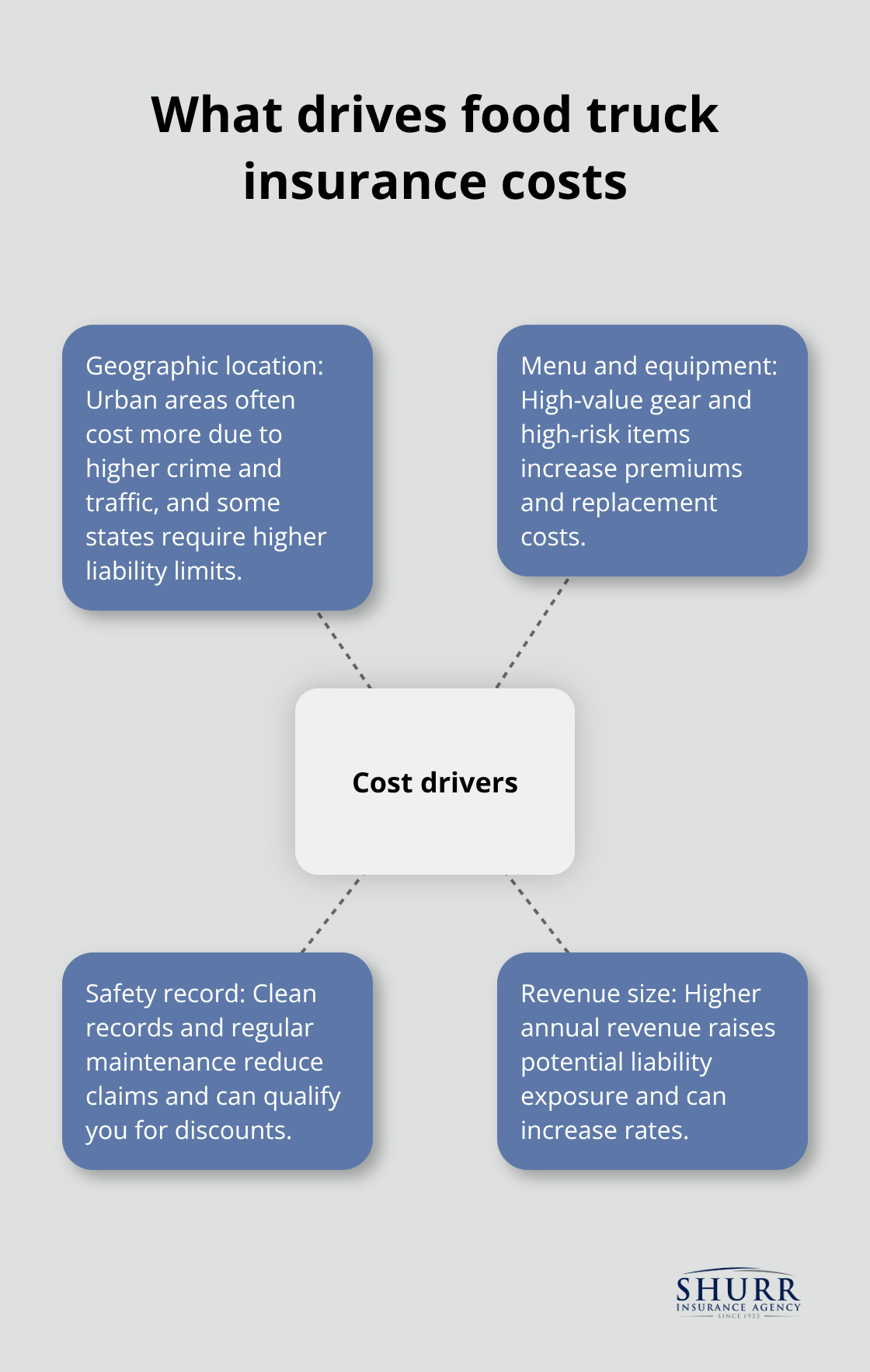
Your operating territory directly impacts insurance costs more than most food truck owners realize. Crime rates and traffic conditions in your intended neighborhoods significantly affect your premiums, with urban areas typically costing 30-40% more than suburban locations. California and New York enforce higher liability coverage requirements due to dense population centers and busy highways, while Texas may require specific additional coverage types based on cargo transportation nature.
Food trucks that operate in high-crime areas face increased theft risk. This makes comprehensive coverage more expensive but necessary for protection against equipment loss and vandalism.
Menu Items and Equipment Value Shape Your Rates
The tools and equipment you use in your food truck influence risk factors substantially. Higher value equipment leads to increased premiums due to higher replacement costs, with grills typically creating different risk profiles than refrigeration units. Food trucks that serve alcohol face liquor liability insurance costs that average $58 monthly (or $700 annually), while those that serve high-risk items like raw seafood or allergen-heavy foods see increased general liability rates.
Your annual revenue also affects calculations, with most carriers that consider business size when they determine coverage costs. The more revenue you generate, the higher your potential liability exposure becomes.
Safety Records Determine Your Insurance Future
Your record and claims history create the strongest impact on premium calculations. Workers’ compensation costs decrease when you employ staff with clean backgrounds and good records, while previous accidents or safety violations increase rates across all coverage types. Regular maintenance of your food truck reduces potential claims and demonstrates risk management to insurers, often qualifying you for safety program discounts.
Accurate worker classification saves money on workers’ compensation insurance. Detailed safety protocols can reduce your business insurance risk profile significantly and show insurers that you take prevention seriously.
These cost factors directly connect to the types of claims that food truck owners face most frequently, which we’ll examine next to help you understand where your biggest risks lie.
What Claims Hit Food Trucks Most Often
Food truck owners file theft and fire claims more frequently than any other type of insurance claim, with vehicle accidents ranking as the third most common incident. Equipment breakdown claims affect operators significantly, while customer slip and fall accidents generate liability claims that average $33,000 according to industry data. Vehicle collision damage represents the highest single-incident costs, often exceeding $25,000 when cooking equipment sustains damage during transport.
Vehicle Accidents During Transit and Setup
Commercial auto claims spike during peak hours when food trucks navigate congested areas to reach prime locations. The weight distribution of cooking equipment makes these vehicles handle differently than standard trucks, which contributes to 23% more accidents than comparable commercial vehicles. GPS tracking systems and dash cameras reduce accident-related claims by 15% while they provide evidence for disputed liability cases. Food truck operators should avoid backing up without spotters and always secure equipment before they drive, as unsecured items cause internal damage during sudden stops.
Customer Injuries at Service Locations
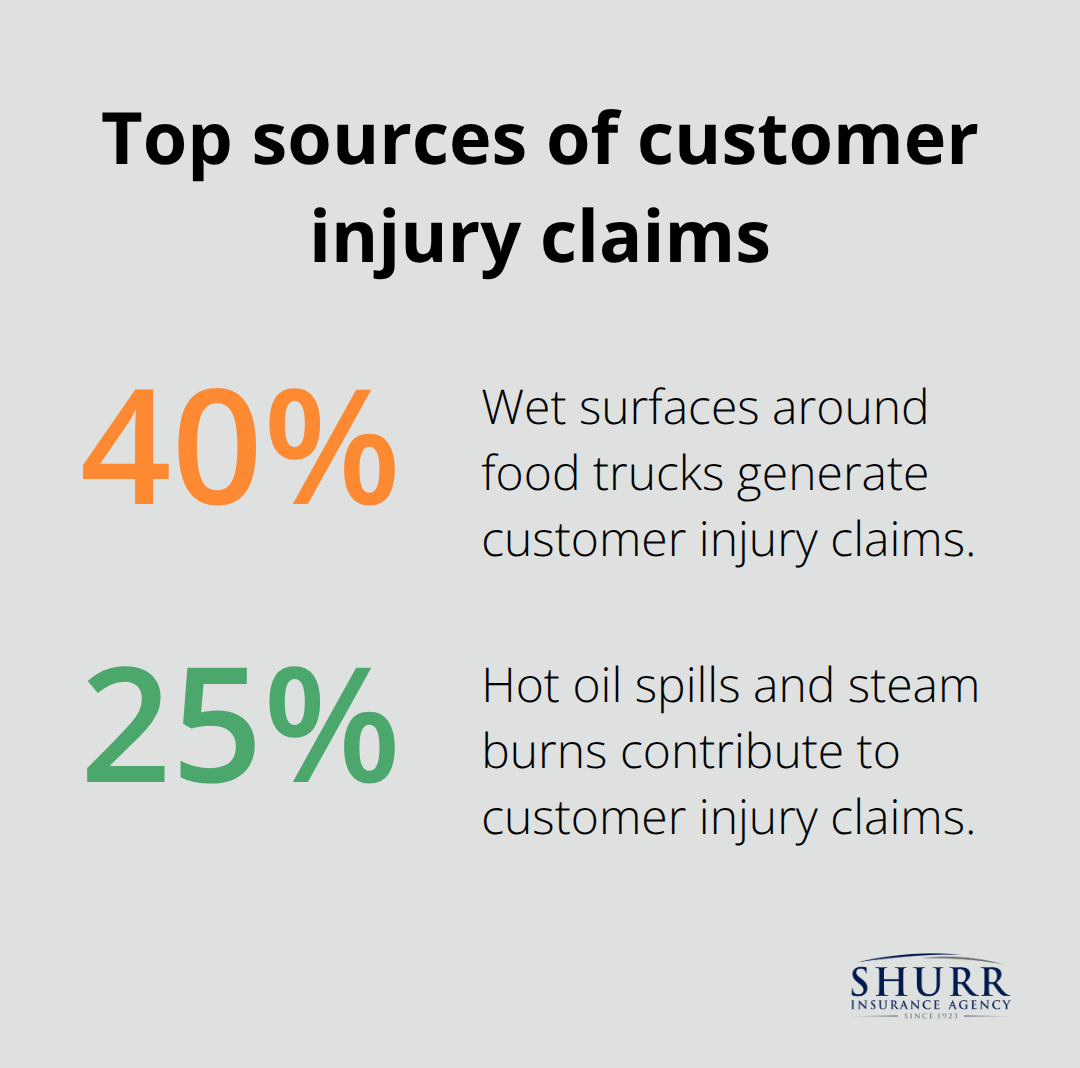
Wet surfaces around food trucks create slip hazards that generate 40% of customer injury claims, with average settlements that reach $15,000 per incident. Anti-slip mats, proper drainage systems, and immediate cleanup protocols prevent most of these accidents. Hot oil spills and steam burns account for another 25% of customer injury claims (particularly during busy service periods when staff rush food preparation).
Equipment Failures and Food Spoilage
Generator failures and refrigeration breakdowns cause food spoilage losses that average $3,200 per incident, which makes equipment maintenance contracts worth their cost. Propane system malfunctions account for 8% of food truck fires, so regular inspections and proper ventilation systems become non-negotiable safety requirements. Electrical system failures during peak service hours result in lost revenue that averages $1,800 per day when trucks cannot operate.
Final Thoughts
Food truck insurance protects your mobile business with four essential coverage types that cost between $392-$1,152 monthly. General liability coverage averages $42 per month, commercial auto insurance ranges from $272-$954 monthly, workers compensation adds $78 monthly, and equipment breakdown protection prevents costly business interruptions. These policies shield you from vehicle accidents, customer injuries, and equipment failures that generate thousands in losses.
Proper protection starts when you assess your risks based on location, menu items, and equipment value accurately. Compare quotes from multiple providers to find coverage that matches your specific operation needs. Document your safety protocols and maintenance records to qualify for premium discounts (which can reduce your annual costs by 10-15%).
Independent agents provide access to multiple insurance companies and offer personalized guidance through complex coverage decisions. We at Shurr Insurance represent many top insurance companies and work to build long-term relationships while we place customers first. Our experienced agents help food truck operators identify risks and secure proper coverage for their unique business needs.