

Indiana law requires most employers to carry workers compensation insurance to protect their employees and business operations. This mandatory coverage provides financial protection when workplace injuries or illnesses occur.
We at Shurr Insurance help Indiana employers navigate these requirements and find the right coverage for their specific needs. Understanding the basics can save you from costly penalties and protect your workforce.
Understanding Workers Compensation Requirements in Indiana
Mandatory Coverage Rules Apply to Nearly All Employers
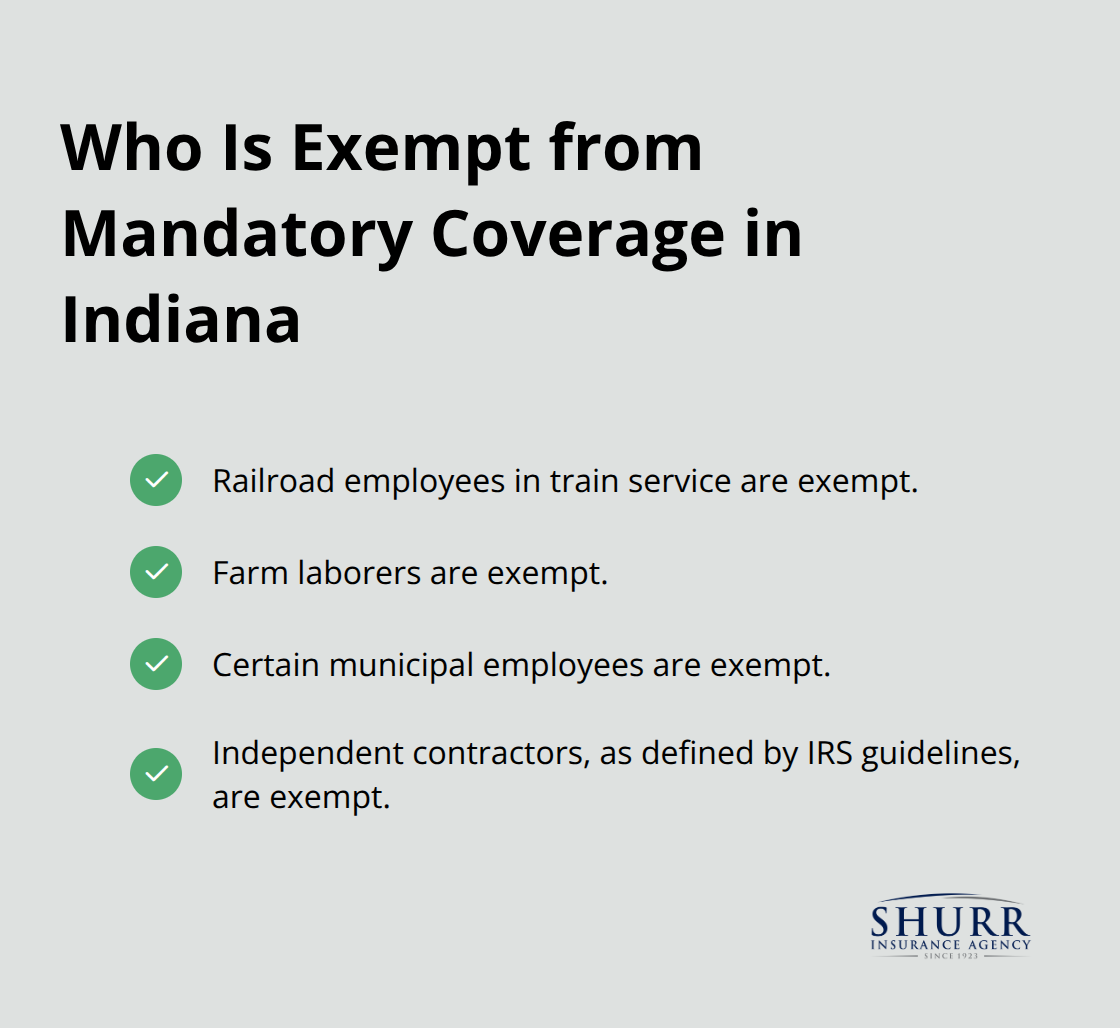
Indiana Code 22-3-2-2 mandates workers compensation coverage for virtually all employers, regardless of business size. Unlike many states that exempt small businesses, Indiana maintains near-universal coverage requirements. The only exceptions include railroad employees in train service, farm laborers, certain municipal employees, and independent contractors (as defined by IRS guidelines). This comprehensive approach means that even single-employee businesses must carry coverage, which makes Indiana one of the strictest states for workers compensation compliance.
Non-Compliance Penalties Reach Significant Amounts
Employers who fail to maintain workers compensation insurance face severe financial consequences. The state classifies non-compliance as a Class A infraction with substantial fines under Indiana Code 34-28-5-4. Additional penalties include double compensation liabilities and unlimited medical expense coverage for injured workers. Failure to report workplace injuries compounds these penalties, potentially resulting in significant fines and bad faith judgments against the employer. These penalties vary significantly between counties (with some jurisdictions imposing stricter enforcement than others).
Reporting Requirements Demand Immediate Action
Indiana employers must report all work-related injuries to their insurance company within 30 days, particularly those that result in missed work. This reporting window is non-negotiable and missing it triggers additional Class C infractions. Employees retain the right to file complaints with the Indiana Workers Compensation Board about employer non-compliance, which creates additional legal exposure for businesses that ignore their obligations.
Financial Protection Extends Beyond Basic Coverage
The Indiana Workers Compensation Board oversees regulations and compliance throughout the state. Employers must obtain coverage from suppliers authorized to transact business in Indiana or furnish satisfactory proof of financial ability to pay direct compensation. Workers Comp coverage covers lost wages and medical treatment costs resulting from an on-the-job injury or work related illness. Insurance companies that fail to comply with administrative orders face Class C infractions and potential suspension of their business licenses.
These strict requirements set the foundation for understanding what benefits workers compensation provides when workplace injuries occur.
Key Benefits and Coverage Areas
Workers compensation insurance operates as a no-fault system in Indiana, which means injured employees receive benefits regardless of who caused the accident. The coverage provides immediate medical care through employer-selected healthcare providers, with no deductibles or copayments for approved treatments. Indiana law grants employers the right to choose medical providers, so injured workers cannot simply visit their preferred doctor. This system covers all necessary medical expenses including emergency care, surgery, rehabilitation, and ongoing treatment until maximum medical improvement occurs.
Medical Expenses and Treatment Coverage
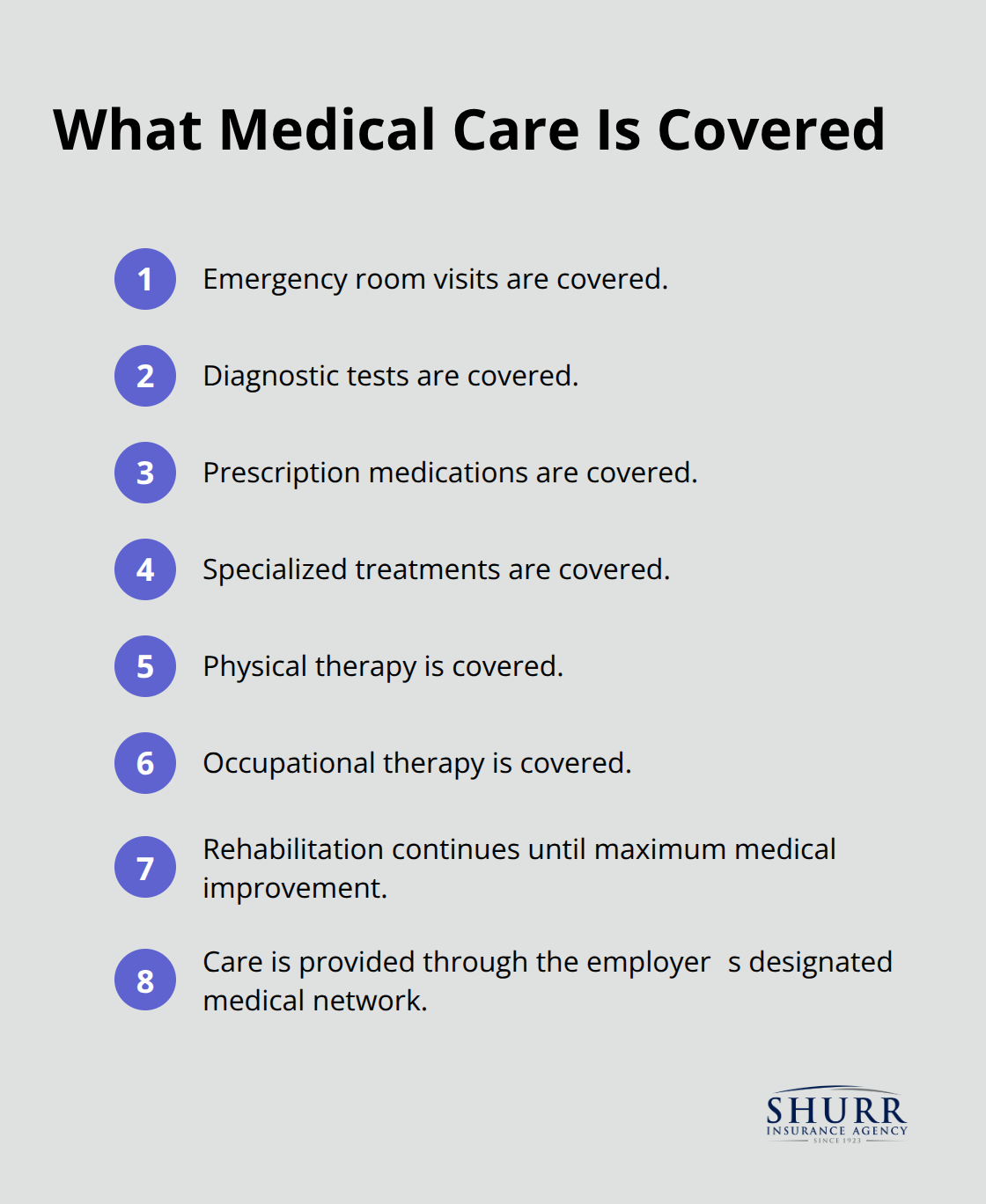
The insurance covers complete medical treatment from the moment an injury happens. Emergency room visits, diagnostic tests, prescription medications, and specialized treatments all fall under this coverage. Physical therapy, occupational therapy, and other rehabilitation services continue until doctors determine the worker has reached maximum medical improvement (the point where further treatment won’t significantly improve the condition). Employers must provide this care through their designated medical network, though workers can request second opinions in certain circumstances.
Lost Wage Replacement and Disability Benefits
Temporary total disability benefits replace approximately two-thirds of an employee’s average weekly wages while they cannot work due to their injuries. The Indiana Workers Compensation Board calculates these payments based on wages from the 52 weeks before the injury occurred. Temporary partial disability benefits apply when workers can perform limited duties but earn less than their pre-injury wages. Permanent total disability provides ongoing benefits for workers who cannot return to any job, while permanent partial disability compensates for lasting impairments that affect their ability to earn money.
Death Benefits for Families
Fatal workplace accidents trigger death benefits that provide financial support for spouses and dependents who survive the worker. These benefits typically equal two-thirds of the deceased worker’s average weekly wage, distributed among qualified survivors according to Indiana law. The coverage includes immediate burial expenses (up to statutory limits) and ongoing weekly payments to help families maintain financial stability. Surviving spouses receive benefits until remarriage or death, while dependent children receive support until age 18 or 23 if they attend college.
Understanding these benefits helps employers see the value workers compensation provides, but the actual cost depends on several specific factors that affect premium calculations.
Cost Factors and Premium Calculation
Workers compensation premiums in Indiana start with industry classification codes that reflect the actual risk level of your business operations. The National Council on Compensation Insurance assigns specific class codes based on employee job duties, with rates that vary dramatically between industries. Construction companies typically pay around $3.50 per $100 of payroll, while office workers cost approximately $0.35 per $100 of payroll. Manufacturing businesses with heavy machinery face rates between $2.00 and $4.00 per $100 of payroll (depending on specific operations). These base rates form the foundation of your premium calculation, but your actual cost depends heavily on your claims history and safety record.
Experience Modification Factors Control Your Final Rate
The experience modification rating system directly impacts your premium when it compares your claims history to similar businesses in your industry. Companies with fewer claims than expected receive credits that reduce premiums below the base rate, while businesses with more frequent or severe claims face debits that increase costs significantly. A modifier of 0.85 means you pay 15% less than the standard rate, while a 1.25 modifier increases your premium by 25%. This three-year average calculation means that workplace injuries continue to affect your premiums for years after they occur. Smart employers invest heavily in safety programs because one serious injury can cost thousands in premium increases over multiple policy periods.
Safety Programs Generate Measurable Premium Reductions
Insurance companies offer substantial discounts for documented safety programs that reduce workplace injuries. Drug-free workplace programs typically provide 5% to 10% premium reductions, while comprehensive safety training programs can earn additional discounts. Regular safety meetings, written safety policies, and incident reports demonstrate your commitment to injury prevention. Some insurers offer up to 25% discounts for businesses that implement multiple safety initiatives and maintain excellent loss records (making safety investments one of the most reliable ways to control workers compensation costs long-term).

The Indiana Compensation Rating Bureau tracks these programs and their effectiveness.
Final Thoughts
Workers compensation insurance in Indiana protects your business from devastating financial losses while it provides essential benefits to injured employees. The state’s strict compliance requirements and substantial penalties make proper coverage non-negotiable for virtually all employers. Companies that ignore these requirements face fines up to $10,000, double compensation liabilities, and unlimited medical expenses that can destroy their financial stability.
Independent insurance agents provide access to multiple carriers and competitive rates that captive agents cannot offer. We at Shurr Insurance help Northwest Indiana employers find the right workers compensation insurance Indiana coverage at competitive rates. Our agency represents multiple top insurance companies, which allows us to compare options and identify suitable protection for your specific industry and risk profile.
Indiana employers should start by obtaining quotes from authorized carriers and implement comprehensive safety programs. They must maintain detailed injury records to reduce premiums while they protect their workforce from unexpected workplace accidents. These actions create a foundation for long-term business success (and help avoid costly compliance violations that can threaten your operations).