

Workplace injuries happen fast, and the financial fallout can devastate a business unprepared for them. Indiana employers need workplace injury coverage that actually protects their team when accidents occur.
We at Shurr Insurance help business owners navigate workers compensation requirements and find policies that fit their real risks. This guide walks you through what coverage you need, what injuries it covers, and how to choose the right policy for your operation.
What Indiana Employers Must Know About Workers Compensation
Legal Requirements That Apply to Your Business
Indiana law requires virtually all employers to carry workers compensation insurance, with very few exceptions. Indiana Code 22-3-2-2 mandates coverage for all employees, meaning your business needs active insurance from a licensed Indiana carrier or proof that you can pay claims directly from company funds. The penalties for operating without coverage are severe: employers face Class A infractions, plus the state board can order compensation payments at double the normal rate, including medical expenses and attorney fees. If you fail to report an injury that causes at least one day of missed work, you face a Class C infraction and potential bad faith judgments reaching $20,000.
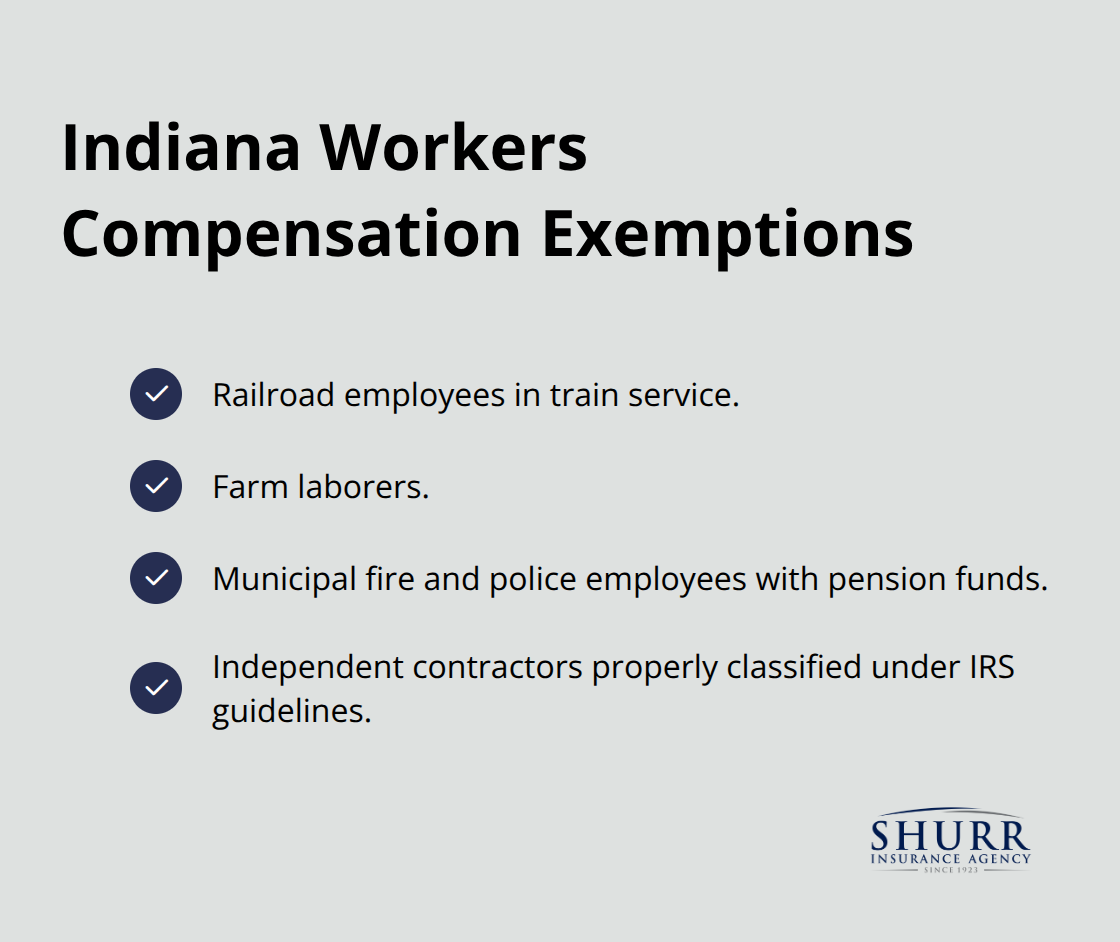
Only a few legitimate exemptions exist: railroad employees in train service, farm laborers, municipal fire and police employees with pension funds, and independent contractors properly classified under IRS guidelines. Misclassifying workers as independent contractors when they should be employees exposes you to serious liability. This distinction matters more than many employers realize, and the state takes violations seriously.
What Your Policy Actually Covers
Workers compensation in Indiana covers medical treatment for work-related injuries through directed care, meaning the insurance carrier pays for treatment rather than your personal health plan. This includes emergency room visits, surgery, physical therapy, and ongoing medical expenses tied to the injury. The policy also provides wage replacement benefits when an employee misses work due to injury.
Temporary total disability (TTD) benefits are paid at a reduced rate based on the worker’s average weekly wage, and they remain non-taxable under Indiana law. If an injury causes permanent disability, your policy covers permanent partial disability benefits based on the type and severity of the injury. Rehabilitation services and vocational retraining are included when an employee cannot return to their previous role. The coverage protects your business from catastrophic medical bills and wage liability while injured workers receive support during recovery.
How Claims Move Through the System
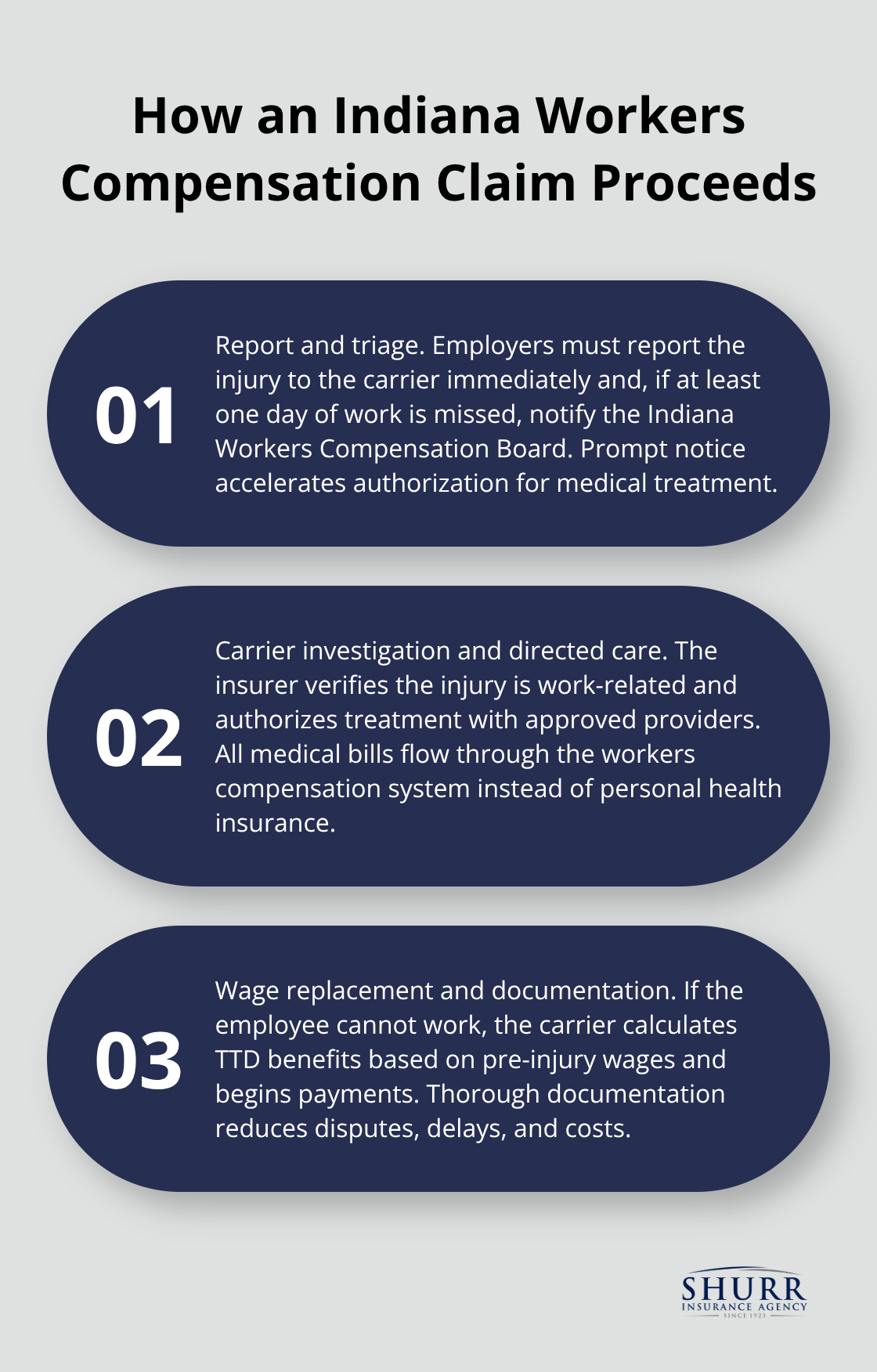
When a workplace injury occurs, you must report it to your insurance carrier immediately and to the Indiana Workers Compensation Board if the injury causes at least one day of missed work. The carrier investigates the claim, verifies the injury is work-related, and authorizes medical treatment. Your employee sees a provider approved by the insurance company, and all medical bills flow through the workers compensation system rather than personal health insurance.
If the injury keeps the worker off the job, the carrier calculates TTD benefits based on their pre-injury wages and begins payments. The process moves faster when employers document everything: incident details, witness statements, medical reports, and communication with the injured employee.
Delays in reporting or missing documentation can trigger disputes that extend the timeline and increase costs.
Understanding these requirements and processes positions your business to handle injuries correctly when they occur. The next section examines the specific injuries most common in Indiana workplaces and how your coverage responds to them.
What Injuries Cost Your Business Most
Fatal Injuries Shape Your Safety Priorities
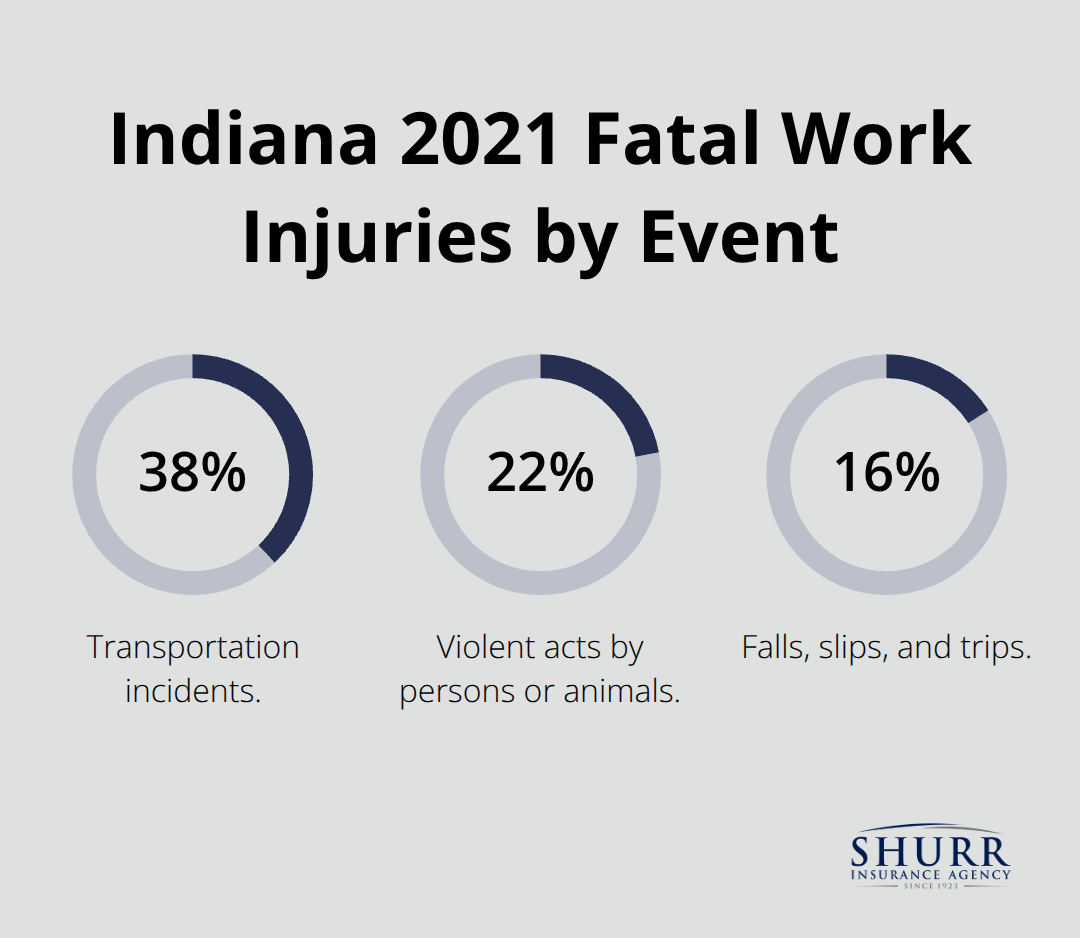
Indiana workplaces recorded 157 fatal occupational injuries in 2021 according to the U.S. Bureau of Labor Statistics Census of Fatal Occupational Injuries. Transportation incidents led the list with 59 fatalities, roughly 38% of the state’s total, making driver safety and vehicle maintenance non-negotiable priorities for any business with mobile operations. Falls, slips, and trips caused 25 fatalities around 16%, violent acts by persons or animals accounted for 35 fatalities roughly 22%, and exposure to harmful substances or environments contributed 20 fatalities around 13%. These numbers tell you exactly where to focus your safety investments.
If your team works in transportation, construction, or manufacturing, you face higher exposure to fatal incidents than the average employer. Wage-and-salary workers accounted for 120 of those 157 fatalities, underscoring why proper coverage matters for standard employees rather than contractors. Workers compensation covers the medical expenses and wage replacement for all these injuries, but prevention always costs less than claims.
Medical Expenses and Lost Wages Hit Hard
Non-fatal injuries hit your bottom line through medical expenses and lost productivity. When an employee suffers a work-related injury, the insurance carrier covers all medical treatment through directed care, meaning your personal health plan stays untouched and your employee receives care without delay. Temporary total disability benefits replace lost wages at a reduced rate based on the worker’s average weekly wage prior to injury, and these benefits remain non-taxable in Indiana.
This non-taxable status matters because it affects how your employee’s benefits interact with health insurance, retirement contributions, and paid time off during their recovery period. Long-term injuries requiring rehabilitation or vocational retraining add significant costs, but your workers compensation policy covers these services when an employee cannot return to their previous position.
Why Coverage Protects Your Bottom Line
The real protection comes from having coverage that handles catastrophic medical bills, ongoing rehabilitation, and wage replacement without forcing your business to absorb those expenses. Companies that experience injuries without proper coverage face financial devastation; those with solid policies recover faster and maintain employee relationships through the recovery process. Your next decision involves selecting the right policy limits and protections for your specific operation and industry risks.
Selecting Coverage That Matches Your Operation
Assess Your Actual Workplace Risks
Your business operates differently from every other company in Indiana, which means your workers compensation needs differ too. Start with honest self-assessment of your actual risks. If you run a construction company with crews working at heights, your exposure to falls and serious injuries is fundamentally different from a small office operation. Calculate how many employees you have, what tasks they perform, what equipment they use, and what injuries could realistically occur in your workplace.
The U.S. Bureau of Labor Statistics data on Indiana workplace fatalities means if your team drives for work, you need robust coverage. Your specific industry determines which workplace risks matter most to your operation. Manufacturing facilities face different hazards than retail stores. Construction sites face different exposures than warehouses. Document the actual work your team performs, the environments they work in, and the specific injury patterns common to your industry. This honest assessment prevents you from buying too little coverage or wasting money on protections you don’t need.
Partner with an Independent Insurance Agent
An independent insurance agent who understands Indiana’s workers compensation system transforms this process from guesswork into strategy. An independent agent represents multiple insurance carriers, not just one company, which means they can compare actual policy terms, coverage limits, and premiums across different options rather than pushing you toward a single insurer’s products. A good agent asks detailed questions about your operation, reviews your claims history if you have one, and identifies gaps in your current coverage before problems occur.
They also explain how coverage limits affect your premium and what deductible levels make financial sense for your cash flow situation. An agent working on your behalf negotiates with carriers, identifies available discounts for safety programs or loss prevention measures, and ensures your policy limits align with your actual exposure and financial capacity. This professional guidance costs nothing upfront and saves money through better coverage decisions and premium management over time.
Understand How Cost Factors Affect Your Premium
Cost factors vary significantly based on your payroll amount, industry classification, and loss history. A business with multiple prior claims pays higher premiums than one with a clean safety record. Your industry classification determines your base rate; a roofing company pays more per employee dollar than an accounting firm. Payroll directly affects your premium since benefits are calculated based on employee wages.
If you currently carry coverage, ask your agent to conduct a premium audit to verify you are classified correctly and paying appropriate rates. Many businesses overpay simply because their classification has not been updated as their operations changed. Carriers offer discounts for safety programs, loss prevention measures, and clean claims records (these discounts vary by insurer and policy). Your agent identifies which discounts apply to your specific situation and negotiates the best available rates.
Conclusion
Workplace injury coverage in Indiana protects your team when accidents happen and shields your business from financial devastation. Indiana recorded 157 fatal workplace injuries in 2021, with transportation incidents, falls, and violent acts accounting for the majority. Your workers compensation policy covers medical treatment, wage replacement, and rehabilitation services that keep your operation running while injured employees recover.
An independent insurance agent who understands Indiana’s workers compensation system can compare policies across multiple carriers, identify gaps in your current coverage, and negotiate rates that reflect your actual risk profile. They ask the right questions about your operation, review your claims history, and align your policy limits with both your exposure and your financial capacity. This expertise costs nothing upfront and saves money through better coverage decisions over time.
We at Shurr Insurance have served Northwest Indiana since 1923, helping business owners navigate workers compensation requirements and find policies that actually protect their teams. Contact us today to review your current workplace injury coverage in Indiana and ensure your team has the protection they deserve.
Disclaimer: The information provided in this blog is for general informational purposes only and does not constitute legal, financial, or insurance advice. Coverage options, terms, and availability may vary. Please consult with a licensed professional for advice specific to your situation