
Workplace injuries happen fast, but their consequences last far longer. At Shurr Insurance, we know that Indiana employers face real pressure to protect their teams while staying compliant with state law.
This guide covers what you need to know about workplace injury coverage in Indiana, from legal requirements to practical prevention strategies that actually work.
Indiana Workers’ Compensation Requirements and Coverage
What Indiana Employers Must Carry
Indiana law requires virtually all employers with one or more employees to carry workers’ compensation insurance. This isn’t optional. All Indiana employers must provide Workers Compensation coverage to all employees subject to Indiana Code 22-3-2-2, and violations result in significant penalties. Most Indiana businesses operate under this requirement, making it one of the state’s most enforced employment laws. The coverage funds medical care, wage replacement, and rehabilitation benefits when employees suffer work-related injuries.
Medical Expenses and Wage Replacement
When an employee files a legitimate claim, the employer’s workers’ compensation insurance covers all necessary medical treatment related to the injury. This includes emergency care, surgery, physical therapy, and ongoing medical monitoring. Wage benefits follow a structured formula: employees typically receive approximately two-thirds of their average weekly wage when they cannot work due to injury.
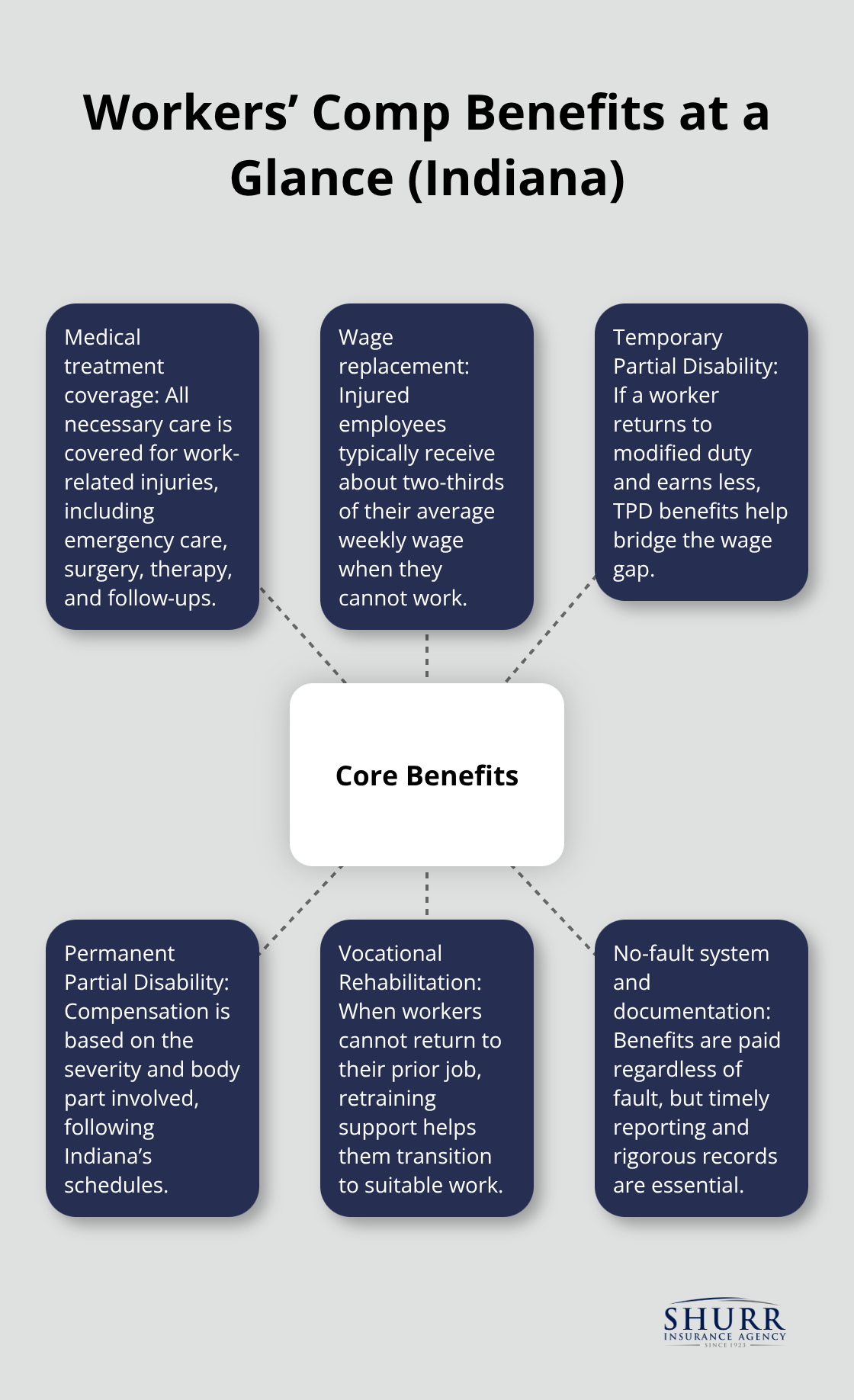
This Temporary Total Disability benefit continues until the worker returns to work or reaches maximum medical improvement. If an employee can return to modified work but earns less than before the injury, Temporary Partial Disability benefits bridge that wage gap. These benefits prevent injured workers from facing financial hardship while recovering, which also protects employers from civil lawsuits that could exceed insurance coverage.
Permanent Disabilities and Vocational Support
Some workplace injuries cause lasting impairment. Indiana law provides Permanent Partial Disability benefits based on the severity and nature of the injury, with compensation schedules that address specific body parts and functional losses. If an injury prevents someone from returning to their previous job, Vocational Rehabilitation benefits help them retrain for different work. This support reduces the long-term financial burden on both the worker and the employer. The workers’ compensation system operates on a no-fault basis. Employees receive benefits regardless of who caused the injury, which eliminates disputes over fault but requires rigorous documentation and timely reporting.
Protecting Your Claim Through Proper Reporting
Injuries must be reported to the employer in writing within 30 days to preserve the claim, and medical care should start immediately to establish work-relatedness and protect the claim’s credibility. Employers who act quickly on injury reports strengthen their position with insurers and reduce the likelihood of claim disputes. Documentation matters significantly-clear records of how, when, and where the injury occurred create a solid foundation for approval. Workers who follow their doctor’s orders and attend all appointments also protect their claims from denial or reduction. Understanding these requirements positions Indiana employers to handle injuries correctly and maintain compliant coverage that actually works when claims arise.
Creating a Safer Workplace Culture
Safety programs fail when they exist only on paper. At Shurr Insurance, we work with Indiana employers who understand that injury prevention requires active commitment, not just compliance checkboxes. The most effective approach combines clear safety protocols, consistent training, and a culture where workers feel responsible for their own protection and their colleagues’ wellbeing.
How Safety Culture Reduces Injuries
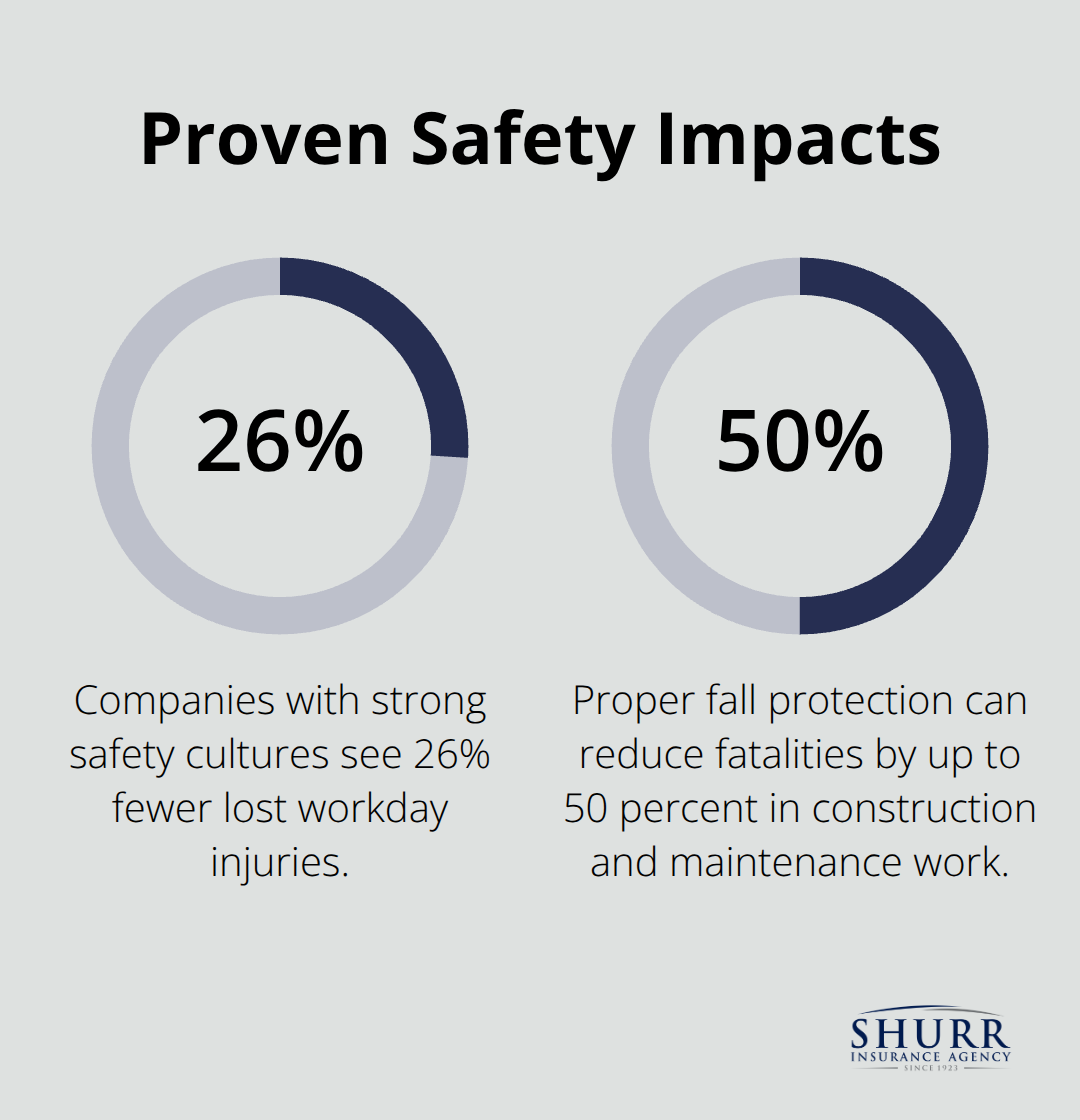
OSHA data shows that companies with strong safety cultures experience 26% fewer lost workday injuries than their peers, which translates directly to lower workers’ compensation claims and reduced insurance costs. This isn’t theoretical-employers who invest in prevention see measurable results within 12 months.
Companies implementing behavior-based safety programs reduce incident rates, far exceeding what traditional training alone achieves.
Designing Industry-Specific Safety Protocols
Start with protocols that address your specific industry risks. Manufacturing facilities face different hazards than construction sites or office environments, so generic safety training wastes time and fails to stick. Indiana employers should conduct a hazard assessment for each job role, document the risks, and create step-by-step procedures that workers follow every single day. Your insurance provider can help identify which injuries appear most frequently in your industry and which prevention strategies address them directly.
Making Training Effective and Visible
Training must happen during work hours, not as an afterthought, and managers should attend the same sessions as frontline workers. When leadership visibly prioritizes safety, employees take it seriously. Insurance carriers often offer premium discounts for employers who complete approved safety training and maintain documented proof of participation. Some insurers reduce premiums when employers implement recognized safety programs and maintain injury-free records.
Tracking Near-Misses to Prevent Future Injuries
Track near-misses and minor incidents just as carefully as serious injuries-they reveal where your systems break down before someone gets hurt. Document these events, investigate what went wrong, and adjust procedures accordingly. Workers’ compensation insurance costs directly correlate with your loss history, so preventing injuries today reduces your premiums tomorrow. This data-driven approach transforms safety from a compliance obligation into a competitive advantage that protects both your workforce and your bottom line.
A critical element of this process is creating a workplace culture where employees report hazards without fear of retaliation. When workers feel safe speaking up about potential dangers, you catch problems early and prevent escalation to serious incidents. This openness, combined with responsive management action, builds trust and demonstrates that safety isn’t just a slogan-it’s a genuine organizational priority.
Common Workplace Injuries in Indiana and Prevention Strategies
Back Injuries Dominate Indiana Claims
Back injuries affect construction workers, warehouse staff, and manufacturing employees most severely. These injuries occur when workers lift, bend, or carry heavy loads without proper technique or equipment. Employers who implement mechanical lifting aids, enforce two-person lift policies for items over 50 pounds, and train workers on proper lifting mechanics see dramatic reductions in back claims within the first year. The investment pays for itself quickly through lower claim costs and reduced lost productivity.
Repetitive Strain Injuries Affect Multiple Industries
Repetitive strain injuries rank second in frequency, particularly affecting office workers, assembly line employees, and healthcare staff. These injuries develop gradually from repetitive motions, awkward postures, or sustained gripping, making them easy to overlook until significant damage occurs. Prevention requires adjustable workstations, ergonomic assessments of individual job tasks, and rotation between different types of work to reduce continuous strain on the same muscle groups. Indiana manufacturers report that ergonomic improvements cost between $500 and $2,000 per workstation but typically save $15,000 to $30,000 per prevented injury claim when accounting for medical expenses and lost productivity.
Slip, Fall, and Height-Related Hazards
Slip and fall incidents rank third, happening most frequently in retail, hospitality, and food service environments where wet or cluttered floors create hazards. These injuries are entirely preventable through regular floor inspections, immediate cleanup of spills, proper footwear requirements, and adequate lighting in all work areas. Falls from heights represent the most serious category in construction and maintenance work, where proper fall protection equipment, secured ladders, and safety harnesses reduce fatalities by up to 50 percent according to OSHA data.
Documentation Creates the Foundation for Claims
Documentation determines whether injured workers receive the benefits they deserve and whether employers maintain accurate loss histories that insurance carriers use to calculate premiums. When an injury occurs, the employer must document the date, time, location, names of witnesses, and detailed description of what happened within 24 hours while details remain fresh.
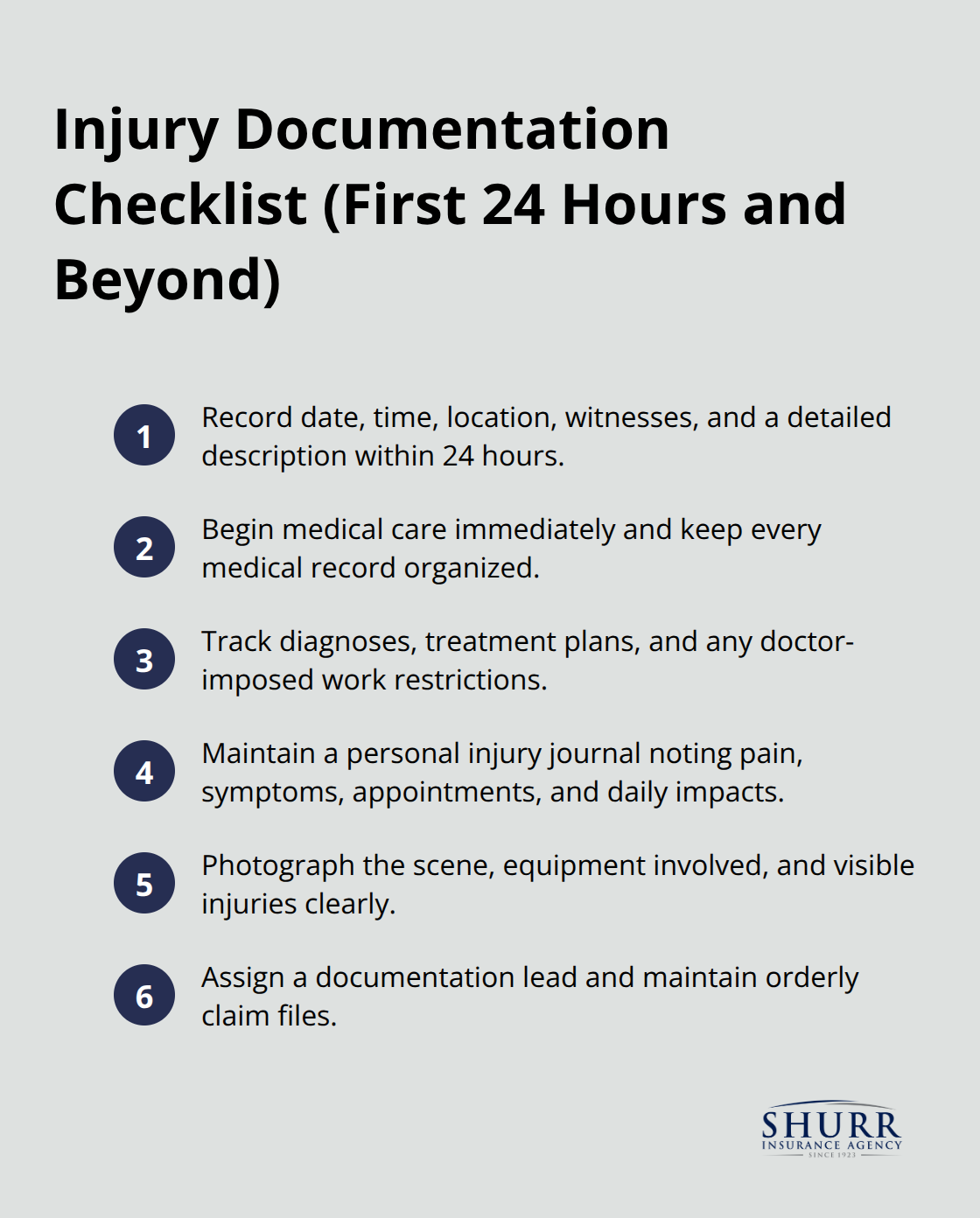
Medical records should be collected and organized immediately, with particular attention to diagnoses, treatment plans, and any work restrictions the doctor imposes. Workers should maintain a personal injury journal that documents pain levels, symptoms, medical appointments, and how the injury affects daily activities, as this record becomes valuable if disputes arise later.
Protecting Claims Through Careful Communication and Evidence
Communication with the insurance adjuster requires care and precision: stick to factual information, avoid speculation about how the injury will affect long-term work capacity, and never sign documents without reviewing them carefully or consulting with an attorney if the claim becomes complicated. Employers who establish clear injury reporting procedures, assign responsibility to a specific person for managing documentation, and maintain organized files reduce claim disputes significantly and demonstrate professionalism to insurers. Photography matters too-clear photos of the injury location, any equipment involved, and visible injuries themselves create undeniable evidence of what happened. This documentation protects the injured worker’s right to full benefits and protects the employer by establishing credibility with the insurance carrier and reducing the likelihood that a claim gets denied or delayed.
Final Thoughts
Workplace injury coverage in Indiana protects both employees and employers, but protection only works when you act before injuries happen. Companies with strong safety cultures experience significantly fewer lost workday injuries, which directly reduces workers’ compensation claims and insurance premiums. Back injuries, repetitive strain injuries, and slip-and-fall incidents dominate Indiana claims, but each one is preventable through specific, industry-appropriate strategies that cost far less than the medical expenses and lost productivity that injuries create.
Documentation and reporting speed matter enormously when injuries occur. Injuries reported within 24 hours with clear details, witness statements, and photographs establish credibility with insurance carriers and protect injured workers’ rights to full benefits. When employees follow medical treatment plans and employers maintain organized claim files, disputes become rare and claims process faster, which strengthens your loss history and reduces future premiums.
The real competitive advantage belongs to employers who combine mandatory workers’ compensation coverage that meets Indiana law, active safety programs tailored to their specific industry risks, and systematic documentation when injuries occur. Contact Shurr Insurance to review your current workplace injury coverage in Indiana and explore how proactive risk management protects your bottom line while keeping your team safe.
Disclaimer: The information provided in this blog is for general informational purposes only and does not constitute legal, financial, or insurance advice. Coverage options, terms, and availability may vary. Please consult with a licensed professional for advice specific to your situation